Guest op-ed by Yilson Marmolejo
Quibdó, Chocó – Two days after the earthquake, Quibdó feels like a different city.
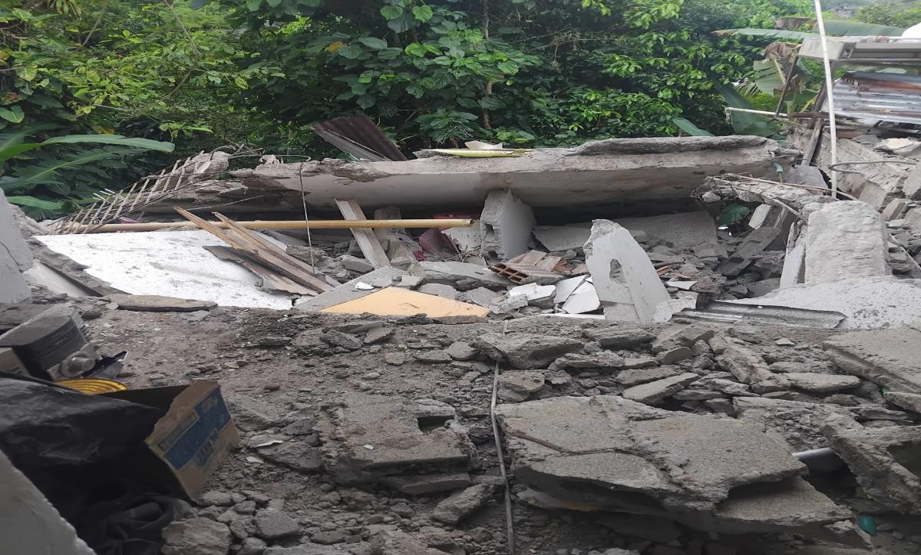
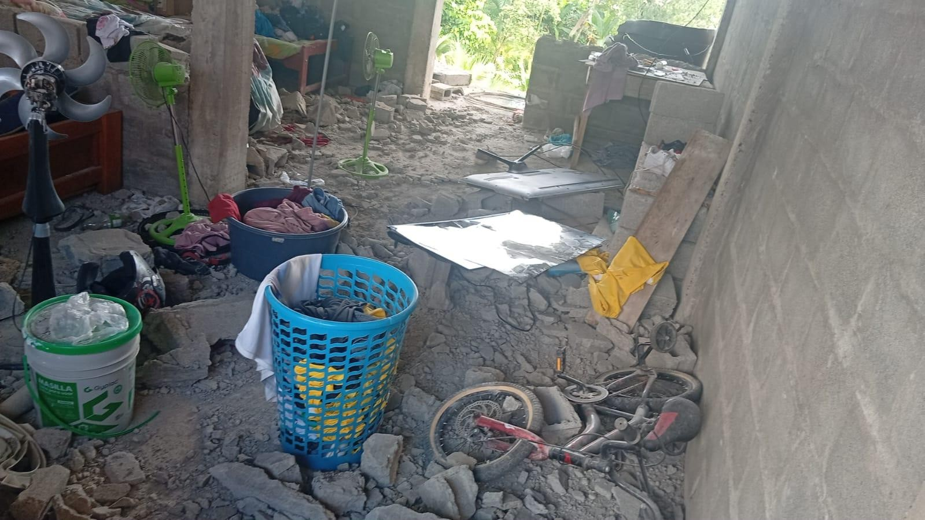
Fear still hangs in the air on the streets. Some families are reluctant to return to their homes—with cracked walls, damaged columns, and wrecked roofs—and even those homes that are still standing no longer offer the same sense of security as before.
The August 10 earthquake left the city battered from north to south. It also left a question that’s hard to ignore: What would have become of Quibdó without the solidarity of its residents?
Extensive damage
The earthquake did not affect just one neighborhood; the damage extended the city. According to mapping conducted by the Chocó Governor’s Office, more than 2,791 instances of property damage have been identified in the municipality of Quibdó.
Local estimates put the number of casualties at 138 injured and 14 dead.
Behind every number lies a story – such as that of Bertha Roa, as she was known in the El Jardín neighborhood.
When the tremor began, Bertha tried to save her two youngest children. Amid the chaos, a wall gave way and fell on her as she pushed her two kids to safety. The structure not only took her life but also claimed the lives of two young people who were nearby; three people died practically at the same moment.
Another case is Luis Rivas, or Lucho, as he was known in the neighborhood.
Lucho was helping to rescue people. He had managed to pull one person out, and instead of getting to safety, he went back to try to help another. That’s when a wall caught him by surprise and fell on him; he died trying to save someone else.
These stories explain better than any statistic what Quibdó is going through. That in the absence of a state, the tragedy sparked solidarity and sacrifice.
Neighbors who didn’t know each other began working together. People who had shovels lent them to strangers. Those with vehicles made them available to transport the injured or carry water and food.
Others walked for hours to reach the places where help was needed. As a result, in some neighborhoods, people stayed awake all night – not only out of fear of new aftershocks, but because there were still people who needed to be found.
The community organized itself as best it could.
When the rubble buried six people in the Medrano neighborhood, help in the form of specialized tools to clear the debris did not arrive as quickly as the emergency demanded, according to testimonies gathered in the area.
Residents did not sit idly waiting for help but rather organized themselves, with private citizens providing a backhoe and other tools to try to clear a path through the remains of the structures. Some removed rocks with their bare hands; others searched for shovels, crowbars, and any tool that might be useful. The National Police assisted with the search efforts, but much of the initial work was carried out by a community that decided to become rescuers.
Lacking state response
In the Medrano neighborhood, the tragedy revealed a reality that was repeated in various parts of Quibdó: when the emergency struck, the initial response came from the community.
And that spontaneous organization raises an uncomfortable question for the authorities: Why doesn’t a city located in a seismically active zone have much stronger community preparedness to deal with an emergency of this magnitude?
Quibdó is no stranger to earthquakes.
Its older residents remember the 8.2 quake in 1979 and smaller shocks are common in the area. But for many younger generations, the tremor on August 10 was their first experience of an earthquake of such magnitude.
The Colombian Geological Service maintains a system for monitoring seismic activity and records events in the department. Chocó is located in a region of significant tectonic activity.
But knowing that a region is prone to earthquakes does not necessarily mean it is prepared for when one occurs.
In many neighborhoods of Quibdó there are no clearly identified meeting points where families can go after an earthquake. Nor is there an ongoing, widespread public education campaign teaching the population what to do during the first few minutes of an emergency – how and where to take cover, where to gather, how to help without becoming another victim, how to identify a building that might collapse, and who coordinates the community response. These are questions that should have answers before an earthquake occurs, not after.
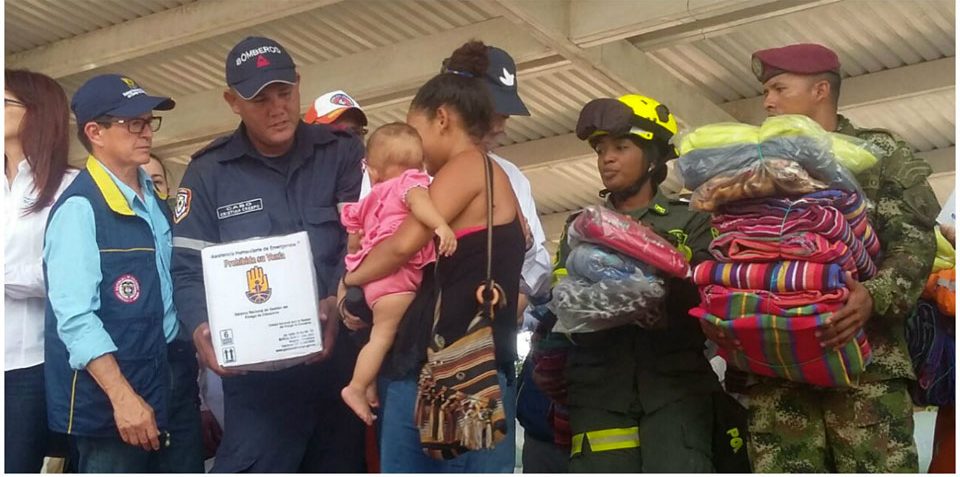
In the hours following the earthquake, the arrival of heavy equipment and institutional support was one of the main concerns among affected residents.
They criticized the Municipal Government, whose response they believe did not come as quickly as the emergency demanded.
The national government arrived in the city later.
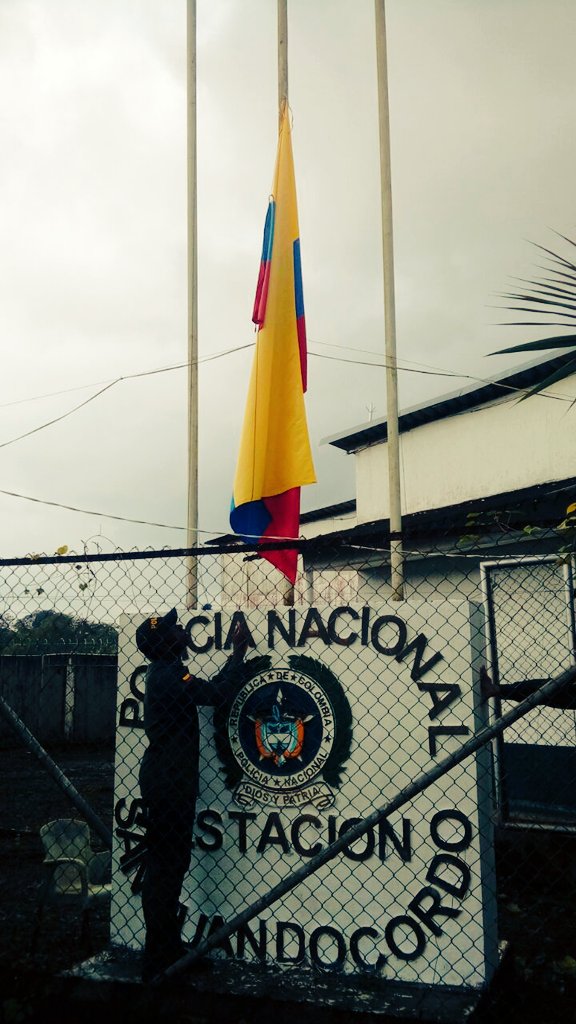
President Abelardo de la Espriella traveled to Quibdó and made statements from the National Police command center.
In his remarks, he promised resources to address the emergency and assured that affected families would receive support, including rental subsidies and funds for home repairs. He also stated that Quibdó and Chocó would no longer be considered “the land of the forgotten.”
But for those who spent hours clearing debris, searching for family members, and trying to save lives, the presence of government agencies comes down to one very simple thing: arriving while there is still someone to save.
Looking to the future
Today, Quibdó is filled with silence.
The earthquake both unleashed trauma and brought up pain from the past.
For many residents, it reawakened memories of the 1979 earthquake. The difference is that now a new generation has experienced firsthand what, for decades, they had only heard their parents and grandparents recount. The city will have to rebuild homes, streets, and structures, but it will also have to rebuild a basic sense of security – the safety of returning home.
Perhaps the most important question raised by the tragedy is what would have become of Quibdó without its people?
What would have happened in the Medrano neighborhood if a private citizen hadn’t made a backhoe available to the community?
What would have happened if the neighbors hadn’t started clearing away the rubble?
What would have become of those who were trapped if people hadn’t decided to organize themselves?
The earthquake brought down walls, but it also revealed something that isn’t easily captured in statistics: the ability of Quibdó’s residents to look out for one another when institutions fail to respond in time. Solidarity saved lives.
But a city cannot rely solely on solidarity to overcome a disaster.
The emergency leaves an enormous task for Quibdó and the government: to rebuild damaged homes, assist families who lost their homes, provide temporary housing, support those who lost loved ones, and establish a genuine strategy for community prevention and response.
Because yesterday’s earthquake is over, but the next one could strike at any moment.
And Quibdó should never again have to ask itself, in the wake of a tragedy, where the tools are, where the assembly points are, and how to rescue someone trapped under the rubble.
Those answers should be ready before the ground shifts again.
About the author: Yilson Marmolejo is an anthropologist and community worker from Quibdó.