November 10 marks three months since the 7.4-magnitude earthquake that struck western Colombia, and with it the country’s response officially moves from emergency relief into reconstruction.
Worldwide, disaster specialists consider this one of the most critical turns in any recovery, characterized by the shift from immediate emergency response to the slower and heavier work of medium-term recovery.
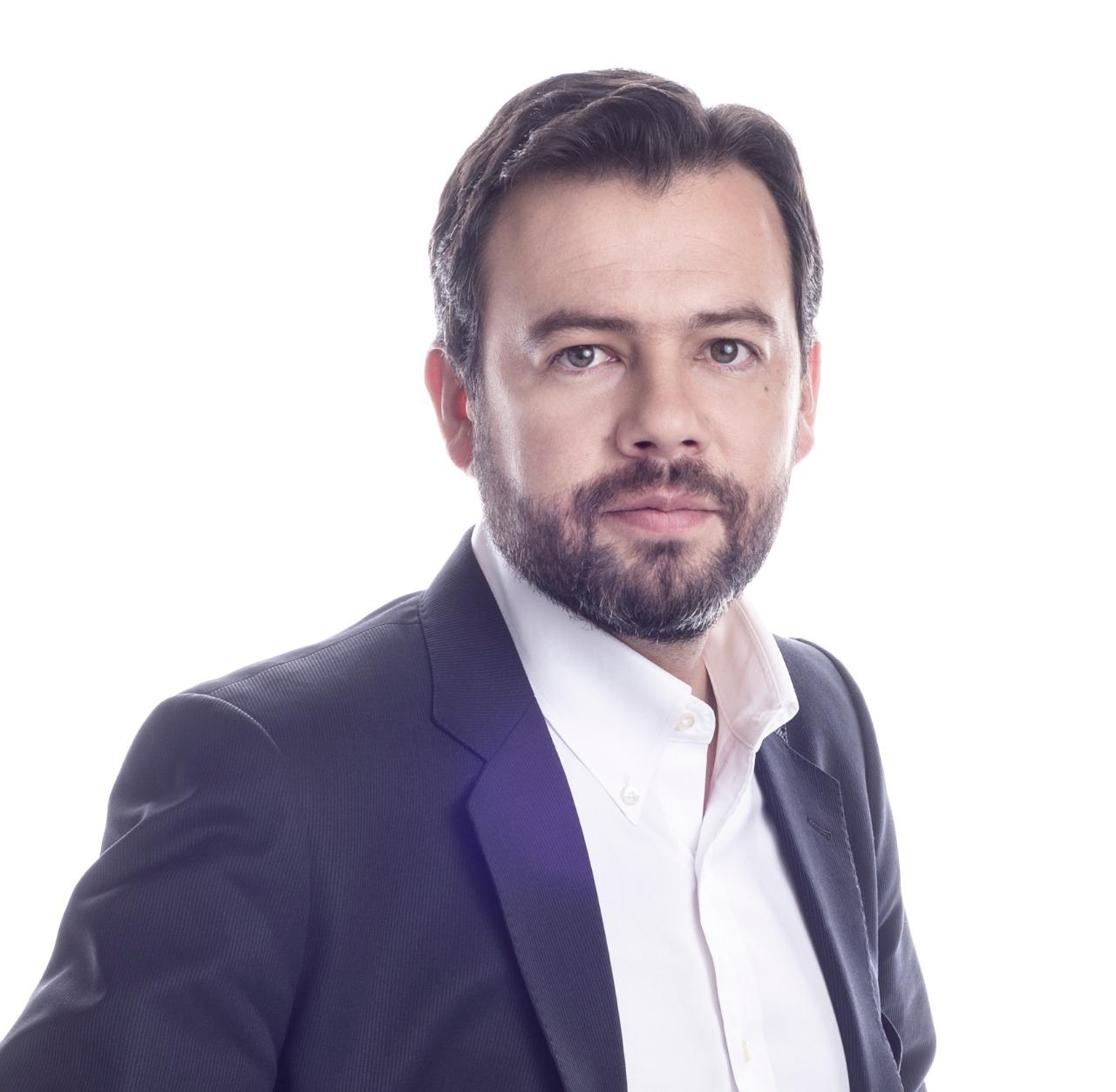
In Quibdó, the capital of Chocó and one of the cities closest to the epicenter in the rural San José del Palmar town, Mayor Rafael Bolaños estimates that work will take close to 3 trillion Colombian pesos (~$930 billion USD). According to preliminary estimates from his office, shared with The Bogotá Post via press release, stabilizing the city alone will cost more than 200 billion COP ($61.9 million USD).
The mayor’s office stressed that the figures reflect needs, not money that is available nor committed.
“I feel the decision has been made. What’s needed now is to organize it,” Bolaños told The Bogotá Post. “There have been many announcements, but we still need to get organized, to structure things, to know how everything will work, how the Fondo Milagro (Miracle Fund) will work.”
The Miracle Fund is the government’s main tool for financing the reconstruction. President Abelardo de la Espriella announced it two days after the earthquake, and the Finance Ministry formally created it by decree on September 9. It is set up as an autonomous trust fund so it can contract under private law and avoid some of the restrictions that slow down Colombia’s existing disaster funds.
The fund began operating on October 7 with about 1 trillion pesos available, and the government plans to contract another 2.7 trillion in November, according to the President’s Office. The money is intended for housing, schools, health centers, water systems, and roads across the affected regions.
The damage Bolaños is trying to repair is still being measured. In a balance presented on October 31, the mayor’s office and the national government reported 1,047 homes in Quidbó destroyed or at risk of collapse, 1,251 uninhabitable, and 1,482 damaged, according to Colombian newspaper El Heraldo. 908 homes had yet to be evaluated at all.
The mayor’s office’s one-month report had already put 14,889 families, or 34,608 people, on the national registry of disaster victims, and recorded eight deaths, 145 injuries, and damage to 84 of its 130 public schools, which affected almost 30,000 students.
Making rhe city safe, then rebuilding
At an October 31 meeting, José Leonidas Tobón Torreglosa, the national government’s special manager for Chocó’s reconstruction, presented four lines of support for Quibdó: funding for demolitions through the Miracle Fund, 100 home repair subsidies of up to 30 million pesos per family, forgivable loans of up to 5 million pesos for small businesses, and a social housing program that is yet to be defined.
The city is counting on more, however, from the 2027 national budget, Colombia’s royalties system, public borrowing, international cooperation, and the private sector.
“Our purpose is to move forward responsibly. Quidbó’s resources and greater technical and operational capacity, working together with every level of government, international cooperation, the business sector and allies who can guarantee safe and sustainable solutions for our people,” Bolaños said.
Demolitions come first because nothing can be rebuilt until the city is stable, and officials expect that stage alone to take about six months.
“There are structures at risk of collapse that need to be demolished,” Bolaños explained. “Right now we don’t have the capacity to carry out all the demolitions the city needs, because we don’t have enough machinery, because we don’t have enough qualified personnel.”
Disasters also tend to produce secondary hazards that build up in the months after the first impact. In Quibdó, “many of these hillsides were fractured in the event, and they are eroding, putting some homes and people at risk,” Mayor Bolaños stressed.
“Some people, unfortunately, have dumped demolition material in the first place they find, that is, in the water sources. All of this, added to heavy rainfall, worsens the risk conditions.”
Bolaños doesn’t expect the state to carry the load alone, however. He understands the state may be slow in these sorts of processes, “and it’s a good thing that the private sector starts taking on many of these roles.”
“All of us have to work together to rebuild, because it’s going to be very complicated for the state [to do alone].”
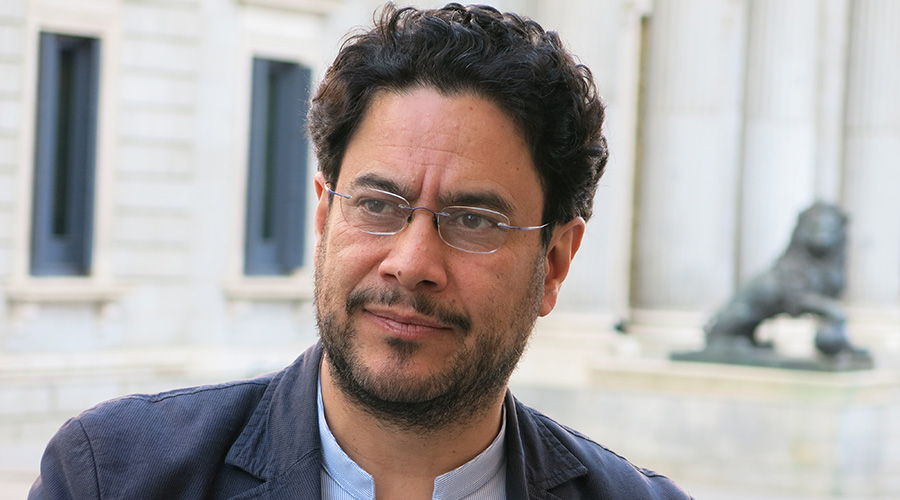
The Grupo Argos Foundation has built a first home in the city, and the Minuto de Dios corporation, the Terpel Foundation and congressman Óscar Benavides have pledged more.
But the local economy needs help as well. Of the 619 businesses the mayor’s office surveyed in September, 96.6% reported damage, and 420 had jobs at risk. “Houses that people built by hand, with their life savings, little by little over years, and in seconds they came down,” Bolaños said. “The pressure is immense.”
Families who can’t wait any longer
While officials plan, families are living in temporary solutions. More than 3,000 households in Quibdó are receiving the government’s rent subsidy, which runs for three months. “That has helped mitigate the situation a little, but it’s a temporary solution, until the definitive, structural solution can come,” Mayor Bolaños explained.
By late October, residents were asking for the payments to be extended. Most of the city’s shelters were set up by communities themselves, and the city turned to a sports venue “because we had no other options at that moment.”
The municipality has set aside 24 hectares of land for resettlement, but each new house still depends on land being cleared for building and property titles being sorted out. “What people are asking for is a response,” Bolaños stressed. The first homes, he added, should “reach those who need them the most, those who are most vulnerable.”
Ana Mejía isn’t waiting for hers. A mother of seven, she can’t work because she cares full-time for her daughter, Kelly Johana, who uses a wheelchair, and for her 14-year-old son, who has a brain cyst.
When the earthquake struck, Kelly Johana was inside the house. “She can’t walk, so we had to get her out by dragging her,” Ana told The Bogotá Post. Then she ran to her younger children’s school, where she fainted.
With the phone line down, she walked into the town center, the only place with a little signal, until her son in Medellín reached her on video call. “He kept telling me, ‘Mom, calm down. Mom, look at me, I’m fine,’” she recalled.
Today, her house is “about to collapse,” she said. She has sold it and plans to move to Zaragoza, a town in Antioquia, where her mother and sister live. “That’s how we keep going,” she explained.
By the third month, recovery specialists note, displaced families have often moved in with relatives instead of waiting in shelters, and those who leave on their own rarely appear in official counts.
Psychologists describe the period around three months after a disaster as the start of the “disillusionment phase,” where media attention fades, relief settles into slow-moving bureaucratic processes, and survivors running on adrenaline hit a wall of exhaustion.
Ana’s message to people following Colombia from abroad is to keep paying attention. “Don’t stop following what’s happening, because this isn’t over. Here in Chocó, it’s still shaking. About eight days ago there was a 5.6 tremor at four in the morning. Don’t treat it as finished, because the emergencies are still happening,” she pleaded.
Bolaños said the strain shows in the people who come to his office. “They need special accompaniment, psychosocial support.”
Women, he added, are those who come in most often, asking how to do things, who to talk to and how they can solve their problems. “They have found strength where there is none, to get up every day and look for a solution.”
The president’s promise
Bolaños’s hopes for the reconstruction go back to the afternoon of the earthquake. He had been in Cali for President de la Espriella’s inauguration on August 7, and flew back to Quibdó on a Colombian Air Force flight.
As he landed, De la Espriella was boarding his plane back to Bogotá, and the mayor took his chance. “I said, ‘President, thank you for coming. We want to take this, in a way, as an opportunity for the development of the city, so that we can not only recover it, but envision it,’” Bolaños recalled.
The president’s answer, he said, was “I have the same vision, don’t worry.”
The president has since visited Quibdó five times. “There is great hope. I think this is a great opportunity for the city,” the mayor explained, “because now, from what I can see, there is political will. Not only from the government, but from the state itself.”
For the mayor, that opportunity includes fixing problems the earthquake didn’t cause, too. “In the middle of the 21st century, the city has coverage that isn’t that of a capital city,” he said. Only about 55% of Quibdó has piped water and 17% has sewerage.
Mayor Bolaños estimated the water and sewerage system needs around 1.2 trillion pesos, and the electricity grid about half that. Without piped gas, households depend on cylinders, “which are more expensive, more complicated.”
He also wants stronger 5G connectivity, “which is key for the daily life of citizens,” and better security. “Without security, we have nothing.”
The same goes for health. The Ismael Roldán Valencia hospital, the first-level facility run by the mayor’s office, has been working from its ground floor, with tents set up outside. “In an emergency, the hospital network is the first thing activated, and it’s the first thing that has to work well. We constantly have to request that patients be transferred to other cities in the country, and that should change.”
Quibdó was already the only Colombian city where monetary poverty rose in 2025, reaching 61.7%.
“It’s not only about reconstructing. It’s about reconstructing well,” Bolaños concluded. “It’s a great opportunity to start, not from zero, but from knowledge, from experience.”
Featured image: Rafael Bolaños via Facebook