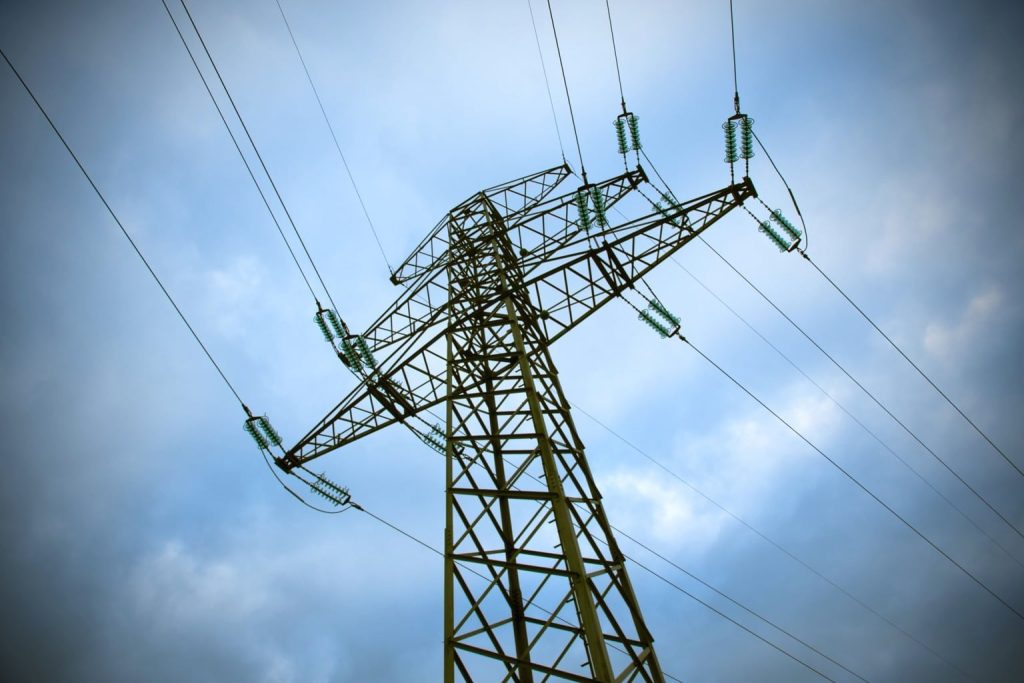
In the early hours of Sunday, November 15, explosive attacks brought down at least three electricity towers in El Pital, a rural municipality in the southern Colombian department of Huila, affecting part of the national grid.
The damage, which was blamed on illegal armed groups, triggered power cuts and rationing in neighboring Putumayo and Cauca and affected as many as 500,000 people in the Amazonian department of Caquetá.
The incident has highlighted the vulnerability of Colombia’s electricity supply to increasing armed violence and ignited a discussion about energy security in rural regions like Caquetá.
Why one attack can switch off a department
Caquetá woke up on Monday without 75% of its electricity supply, according to Senator Jennifer Pedraza. According to the regional utility company Electrocaquetá, power was cut in 15 of the department’s 16 municipalities, including the capital, Florencia. The outage lasted two days, with most households having their electricity restored on Wednesday.
Caquetá sits in Colombia’s south, where the Andes drop into the Amazon basin. Roughly the size of Portugal, it is a land of rivers, rainforest and cattle ranches, and for decades was a FARC guerrilla stronghold. It generates no electricity of its own; fifteen of its municipalities depend on a single line that crosses the mountains from the Altamira substation in Huila, so when the grid upstream fails, there is no backup.
In 2015, a FARC bombing of the Altamira–Florencia line left roughly half a million people without power. In 2018, the national energy planning agency, UPME, declared a second Altamira–Florencia circuit an urgent project. That project is still in the planning stage.
Juana Espinosa coordinates the Amazonian Centre for Political Analysis and Thought (CAPPA) at the Universidad de la Amazonia in Florencia. She sees the blackout as a product of a historically centralized planning model, in which “investment priorities, profitability criteria and infrastructure don’t necessarily respond to the needs of the territories.”
“Something that happens outside our borders ends up affecting our economy, our daily lives and essential services,” she told Latin America Reports.
But she warned against easy fixes. Energy autonomy, in her view, does not mean Caquetá producing all its own power, nor building big hydroelectric dams at any environmental cost. “We cannot solve an energy vulnerability by creating an environmental one.” Even solar needs careful study in the Amazon, where cloud cover and battery costs matter. She envisions a diversified mix: distributed generation, hybrid systems, storage, backup infrastructure and a far more reliable link to the national grid.
“Environmental conservation and the wellbeing of Amazonian people are not contradictory goals.”
Who can afford a generator
Espinosa experienced the blackout herself. Minutes after the power went, the mobile signal followed, which, she notes, came as no surprise. On Sunday her household had electricity for just five hours; on Monday and Tuesday, two blocks of about three hours each.
The crisis, she says, laid energy inequality bare: “Those who can buy a generator, batteries or alternative connectivity are better able to keep going. Those without those resources are left practically cut off.”
She heard the same fears repeated: “We’ll have to buy a generator, because they’re going to keep bombing towers,” and “So many years without an attack like this; things are going to get tough.”
“Violence is experienced through armed attacks,” she says, “but also through its effects on the material conditions of communities.”
President Abelardo de la Espriella, who took office in August, has promised to “govern from the regions.” For Espinosa, that has to mean more than visits and listening sessions. “We need these problems to be translated into budget priorities, executed projects and public decisions.”
“Peripheral departments often appear on the national agenda when there’s an emergency, an act of violence or something that draws media attention,” she said, “but our structural needs require permanent attention.”
What should happen now
Espinosa wants the blackout to be a turning point. The national government, she argues, should treat Caquetá’s energy security as a strategic issue rather than an operational problem for utilities, and prioritize funding and building the second Altamira–Florencia line.
Such projects shouldn’t be judged on profitability alone, because “energy reliability has a social value.” Energy and telecoms operators, meanwhile, need stronger contingency plans and backup.
But Caquetá cannot simply wait for Bogotá. She calls for a departmental energy agenda bringing together local government, utilities, universities, businesses and social organizations, to decide which services, from hospitals and water systems to schools, must never be left unprotected, with local universities leading feasibility studies suited to Amazonian conditions.
“We can’t wait for another attack,” she says, “to start discussing, once again, an infrastructure whose vulnerability we’ve known about for years.”