Euthanasia planned for the numerous offspring of “cocaine hippos” originally smuggled in by Pablo Escobar. Not everyone is happy.
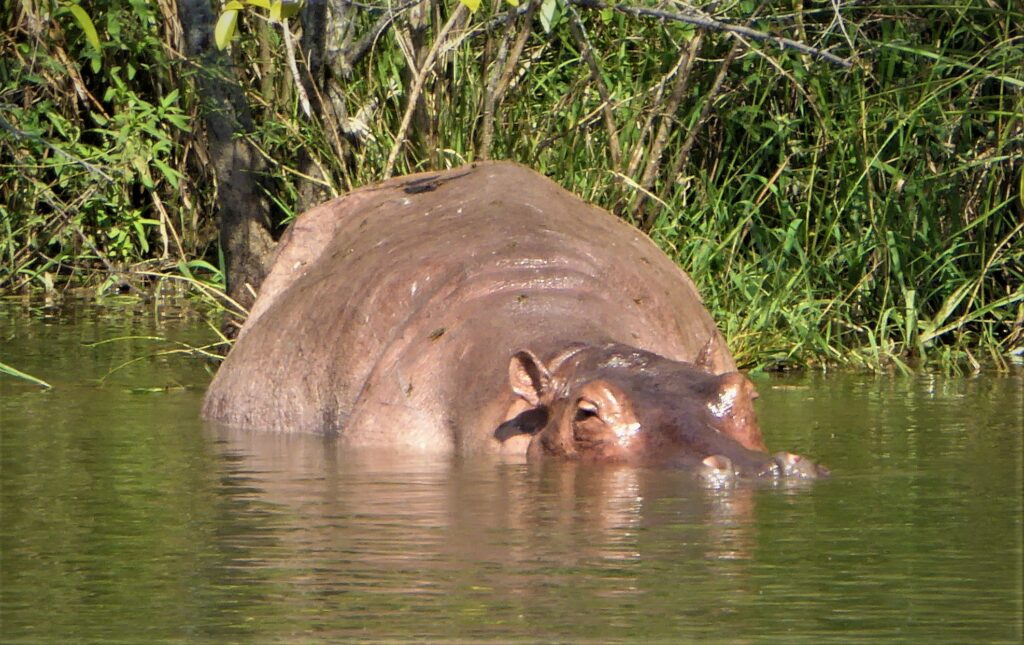
After years of debate over the fate of Colombia’s wild hippos – during which the feral beasts have multiplied in lush tropical rivers – the ministry of the environment has announced a plan to kill at least 80 of the African imports.
The non-native species was smuggled into Colombia by drug baron Pablo Escobar in 1980 as part of his collection of exotic animals – including rhinos and lions – which he kept at his ranch, Hacienda Napoles.
The infamous drug trafficker died in a rooftop battle in Medellín in1993, but a few hippos escaped his lowland ranch to find what biologists would later describe as “perfect conditions” in the nearby Magdalena River.
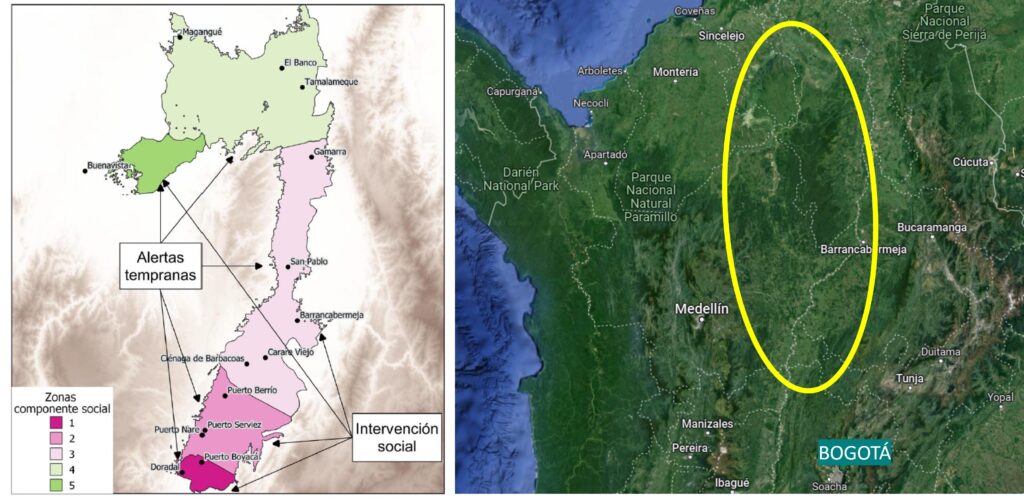
In the decades since around 200 offspring have spread over 100 kilometers (60 miles) of river and swamps bordering departments of Antioquia, Bolívar, Santander and Sucre.
But after years of procrastination over what to do with the wayward Hippopotamus amphibius – with various schemes to sterilize them or ship them to zoos and sanctuaries around the world – Colombia’s environment minister Irene Vélez said this week a cull was the only option.
“We’re talking of a process of euthanasia, which is the technical recommendation,” she told Blu Radio.
The plan was initially to reduce the population by 80 breeding individuals, then cull around 30 beasts per year which would systematically reduce the population.
Hippo boom
The controversial decision is based on a 170-page technical report by the Humboldt Institute and Universidad Nacional in 2022.
The report concluded that the hippos were damaging the tropical ecosystem of the Magdalena river valley by spreading disease and overloading their watery habitat with nitrates: the amphibious herbivores grazed the riverbanks to each munch 50 kilos of grass a day – but then pooped the waste out into rivers and lakes.
Without an urgent cull the population “could increase to 500 hippopotamuses affecting our ecosystem by 2030,” Vélez told a press conference this week. This boom would further put at risk native populations of turtles and manatees.
See also: Hippos need culling, says report
Then there what the report referred to as “hippo – human interactions”, such as a car hitting a two-ton creatures on the main Bogotá – Medellín highway – which runs close to their main hangout near Puerto Triunfo – and even cases of locals trying to keep young ones as pets.
The report also pointed out that hippos were aggressive and territorial and officially the deadliest large mammal – they kill on average 500 people in Africa every year – and attacked boats and canoes on the river aswell as people, cattle and horses around the River Magdalena.
In other videos posted online people are seen chasing them down the highstreet in the town of Doradal.
Hippo takeover
To justify the cull, Vélez said reduction methods such as sterilization were too difficult – anaesthetizing wild hippos is no easy task – and none of the seven nations initially interesting in receiving live hippos for zoos and wildlife parks had followed through.
The cull would start in the second half of the 2026 around hippo hotspots close to Hacienda Nápoles in Puerto Triunfo and Isla del Silencio, a river island near to Puerto Boyacá, she said.
This island is home to a large group one of which attacked and severely injured a farmer collecting water from the riverbank in 2020, according to a news report. Colombia’s wet lowlands had perfect conditions for hippos, biologist Katerine Corrales told a Caracol news crew visiting the island this week.
“Africa has droughts and adverse weather patterns. Here we have a constant climate with abundant water and resources which generates a faster reproduction rate,” she said.
In the same report local villagers complained that the hippos had “taken over the island” and restricted commercial fishing.
Poor Pepe
Not everyone welcomed news of the cull. Hippo protection group Comisión Protectora de la Vida de los Hipopótamos – founded in the town of Puerto Triunfo close to Hacienda Nápoles and which benefits from hippo tourism – rejected the “terrible decision of the national government to authorize a hippo hunt”.
“In our municipality, we are committed to the protection and conservation of these incredible living beings. Hippos are an important part of our identity, and we must live in harmony with them,” said the group on its Facebook page this week.
It called a meeting in Bogotá to seek “non-violent” alternatives to the cull, such as a return to the plan of transferring live hippos to other countries.
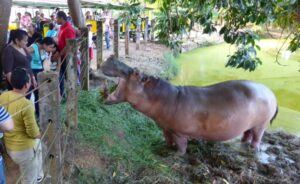
Previous attempts to shoot hippos have ended in public relations disasters, such as the killing of Pepe in 2009. The large male hippo was slated for transfer to a zoo in Costa Rica after rampaging around Puerto Berrio.
But he was shot after a bungled attempt to capture him, and photos of an army platoon posing with his remains caused public revulsion, and a court ban on hunting hippos.
Pepe also highlighted the affection local communities had for “Pablo’s hippos”. For some folk the state persecution of the mammals was synonymous with the hunt for Pablo Escobar, still a popular figure among communities that benefitted from his largesse in the 1980s.
In fact, in the drug baron’s heyday the original hippos were kept at his Hacienda Nápoles in a public zoo and safari park where local families could tour for free. Today the hacienda and zoo is still there but managed by the state as part of a huge amusement park.
A grave in Colombia
This week, Minister Vélez was adamant that culling must form part of any population control.
It was global restrictions on wildlife trafficking – the CITES agreements – that had condemned the hippos in Colombia by preventing them being easily shipped abroad, she explained.
“It’s not enough for a zoo to raise its hand; the country must authorize their entry. Unfortunately, no country has given the green light. This administrative silence indicates that there is no interest in receiving them”.
It seems that putting Pablo’s hippos in overseas zoos is proving as difficult as extraditing the cartel kingpin himself. Like their progenitor, the big beasts face a violent end in Colombia rather than a cage in a foreign land.