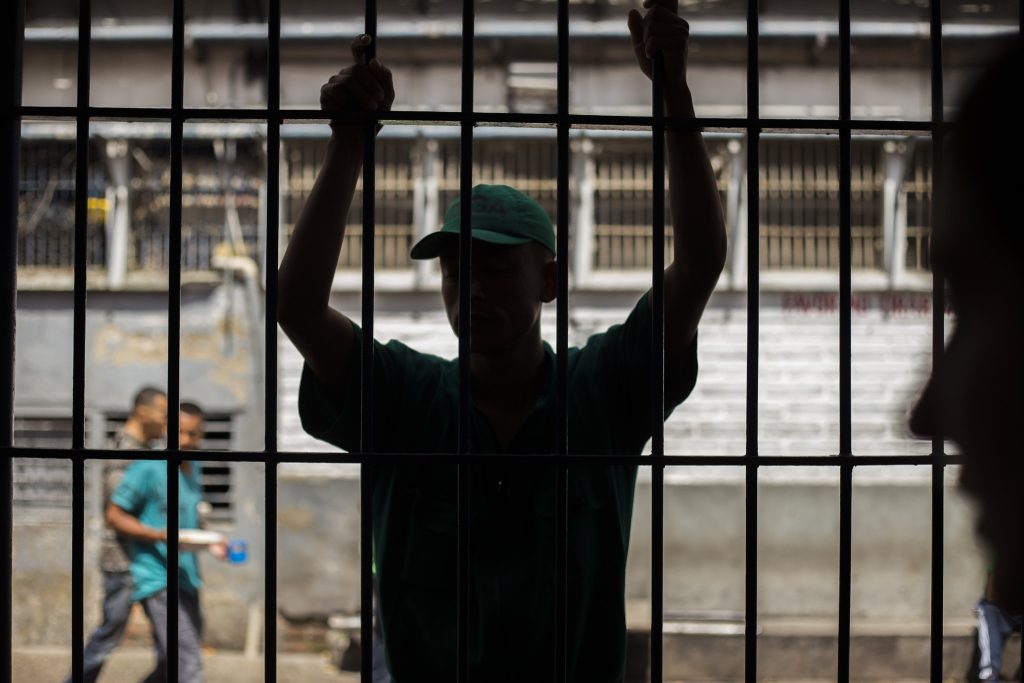
Colombian President Abelardo de la Espriella has made the construction of ten maximum security megaprisons a cornerstone of his hardline security policy.
The far-right leader has proposed building ten large maximum security facilities aimed at isolating the most dangerous criminals and preventing them from coordinating criminal activities from within penitentiary centers.
But as the project moves forward, questions are arising about the financing of the new prisons, how feasible their construction is, and if they will be able to combat the chronic crisis facing Colombia’s penitentiary system.
De la Espriella’s megaprison is the latest solution to a problem that has dogged Colombia for decades: the deficiencies of its penitentiary system.
In 1998, through judgement T-153, the Constitutional Court declared an “unconstitutional state of affairs” within the prison system and, fifteen years later in Judgment T-388 of 2013, it once again acknowledged a structural crisis.
Most recently, in September 2026, the Defensoría del Pueblo – a state human rights ombudsman – warned that structural problems persisted within the Colombian penitentiary system, noting some had even worsened. Its report was based on visits to 30 correctional facilities and 94 temporary detention centers.
On October 26, 2026, the Constitutional Court issued Order 1460 of 2026, mandating the creation of an interinstitutional technical committee. Its task will be to identify the obstacles that have delayed prison infrastructure projects, review financing and construction options, and establish a roadmap for advancing these initiatives.
Overcrowding, difficulties in accessing basic services, and shortcomings in rehabilitation programs have all raised concern about the penitentiary system.
A crisis that goes beyond prison overcrowding
Despite the dire state of affairs in Colombia’s prisons, experts warn that de la Espriella’s plan to build more prisons may not be the solution.
“The fundamental question should be another one: why do we have a prison population of this size, and what measures are we taking to reduce the use of imprisonment,” said Lina Porras, coordinator of the research and advocacy division on the penitentiary system at Temblores, a Colombian NGO.
She explained that an increase in available space would help temporarily solve the issue of overcrowding but that this would not be enough to solve the underlying causes of incarceration.
Porras warned that accommodating thousands of people in the same establishment represents a challenge to guaranteeing the basic services and adequate conditions.
She also pointed out that the location of these prisons could make the family visits and the reintegration processes more difficult, especially if they are built far from the cities.
Porras explained that increasing prison capacity also requires ensuring dignified conditions, access to clean drinking water, medical care, and opportunities for education and rehabilitation. Otherwise, she warned, new facilities could end up replicating the same shortcomings that plague existing prisons.
Megaprisons: security vs rehabilitation
For de la Espriella’s backers, the megaprison project represents a tool to strengthen security and recover control of the penitentiary system.
However, this security-focused approach raises concerns among organizations that work on the rehabilitation of incarcerated individuals.
Lácides Hernández, legal representative for Prison Fellowship Colombia (Cofraternidad Carcelaria de Colombia), explained that mega-prisons can disrupt rehabilitation processes by focusing their efforts on control and surveillance.
“Mega-prisons require a very large infrastructure, and the emphasis is placed on security,” Hernández told The Bogotá Post. “Working inside a mega-prison is very complex, and community involvement or participation is highly limited,” he added.
As an alternative to mega-prisons, Hernández proposes adopting smaller-scale penitentiary models, with facilities that house a maximum of 250 people and allow for greater community involvement in the resocialization process.
Among his recommendations, he highlights the Association for the Protection and Assistance of the Convicted model, which promotes rehabilitation through personal responsibility, community support, and restorative justice.
Hernández also emphasized the importance of maintaining continuous rehabilitation programs, both while sentences are being served and after release, to foster social reintegration and reduce recidivism.
The cost and feasibility of mega-prisons
One of the primary challenges for the construction of ten mega prisons is financing.
During his presidential campaign, de la Espriella proposed turning to domestic and international investors for capital in exchange for contracts to manage the facilities.
The government has also explored the possibility of using public-private partnerships to reduce the state’s initial investment. However, this second model raises questions regarding operating and maintenance costs, as well as the financial obligations that the authorities might incur over the term of the concessions.
The execution of the project requires the participation of various state entities, including the Ministry of Justice and Law, the National Penitentiary and Prison Institute, and the Prison and Correctional Services Unit.
Not only does this create an organizational challenge, but the operation would require vast resources to pay government staff, guarantee security, provide food, offer medical attention, and carry out maintenance tasks.
The success of this project will not depend only on securing the funds to build and maintain prisons; it will also depend on these facilities ensuring dignified conditions and respecting the human rights of those deprived of their liberty.