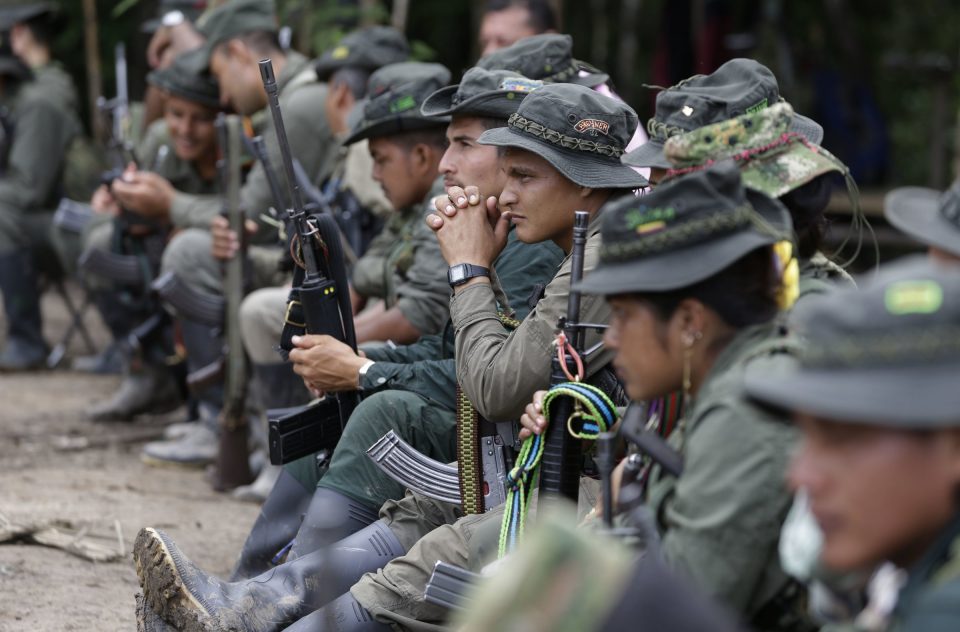
Last month Colombia ratified an historic peace deal to end the Colombian conflict. But for the FARC soldiers, the struggle to reintegrate is just beginning.
Colombian President Abelardo de la Espriella on September 11 shut down all remaining peace negotiations between the government and various armed groups in the country.
De la Espriella campaigned on a tough-on-crime platform, promising to dismantle the “Total Peace” policy of his predecessor, Gustavo Petro.
“In just one month in office, we have kept our word: we brought an end to all the dialogue processes and socio-legal frameworks inherited from the previous government involving criminal and terrorist organizations,” de la Espriella wrote on X.
Since August, the president has been announcing the dismantling of the various negotiation tables, claiming that none of them demonstrated “a genuine and verifiable will for peace,” according to newspaper El País.
According to the presidential communique, the administration put an end to various negotiation tables with dissidents of the former Revolutionary Armed Forces of Colombia (FARC), including the Estado Mayor de los Bloques Magdalena Medio (EMBF), and the Coordinadora Nacional Ejército Bolivariano (CNEB).
In June, 99 CNEB rebels struck a deal to demobilize with Petro’s government. In August, ahead of de la Espriella’s inauguration, they made a plea to the incoming president to honor that agreement. In addition to abolishing peace talks, the measure lifts the temporary relocation zone where the rebels had been living in the southern Putumayo department near the border with Ecuador.
Other scrapped negotiations include those between the government and the National Liberation Army (ELN), and ELN-offshoot Comuneros de Sur. Narco-paramilitary group Las Autodefensas Conquistadoras de la Sierra Nevada (ACSN), as well as criminal gangs from cities like Medellín, Quibdó, and Buenaventura.
Armando Novoa, the former government negotiator in Putumayo, warned that some of the former combatants who were in demobilization talks could return to arms.
“It is news that I regret, and I believe it will have troubling consequences for the region, for local communities, and also for the people who are still in the temporary location zone,” Novoa told newspaper El Tiempo.
Petro’s ambitious “Total Peace” policy saw many armed groups come to the table to negotiate. Despite this, the number of armed actors in the country grew from 13,000 in 2022 to 27,000 in 2025, and the policy failed to bring peace to embattled rural communities.
De la Espriella criticized the policy, saying in the communique that over 7 billion pesos had been spent solely on fees for spokespersons, representatives, and negotiators, not including security, travel expenses, or the upkeep of temporary location zones. De la Espriella called the spending a “waste of public funds.”
“That is over. Under my government, criminals will have no political status, no concessions, and no impunity. The message is unequivocal: submit to justice or face the full legitimate force of the Republic,” de la Espriella declared.