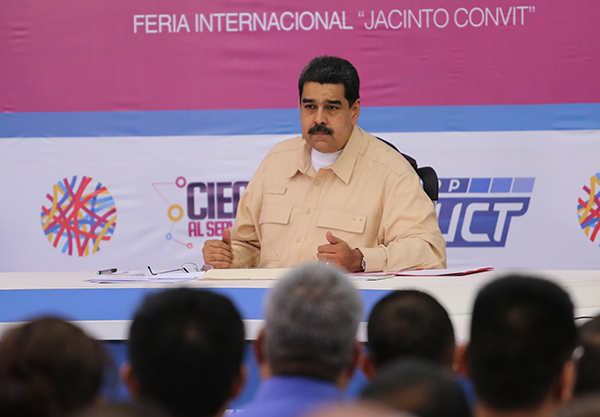
On 9 April 2024, the Chingaza water supply system was holding 16.78% of its capacity. Two days later, Bogotá began turning off the taps.
The cuts ran in nine rotating shifts, neighborhood by neighborhood, across the capital and eleven municipalities in Cundinamarca. They lasted a year. Mayor Carlos Fernando Galán lifted them at 8:00 am on Saturday 12 April 2025, alongside Natasha Avendaño, who runs the city’s water utility, and asked residents to keep the habits the shortage had forced on them.
Colombia holds roughly 2,145 billion cubic metres of renewable internal freshwater, according to World Bank figures drawn from the FAO’s AQUASTAT database, which puts it around sixth in the world. What ran short in 2024 was not the country’s water.
That distinction is the subject of a session at the Horasis Global Summit, which runs from 10 to 12 November at Universidad de Medellín with the City of Medellín as co-host.
Horasis, a Swiss think tank, says it expects more than 1,000 business leaders, government figures, innovators and academics under the theme “Building Tomorrow.”
Its water security session – which will look at water security on a global scale – argues that “thriving futures depend on treating water as strategic infrastructure rather than an unlimited resource.”
Where the water goes
Colombia’s National Planning Department reported that unaccounted-for water, meaning treated water that leaks, is stolen or is never billed, stood at 41.4% nationally in 2018. That was an improvement on 45% in 2011, and still well above the 25% ceiling regulators set in 2017. Two out of every five liters a utility treats never reach a paying tap.
Coverage follows the same pattern, widening with distance from the cities. Urban aqueduct coverage runs above 98%, while in rural Colombia around 66% of households have access to safe water.
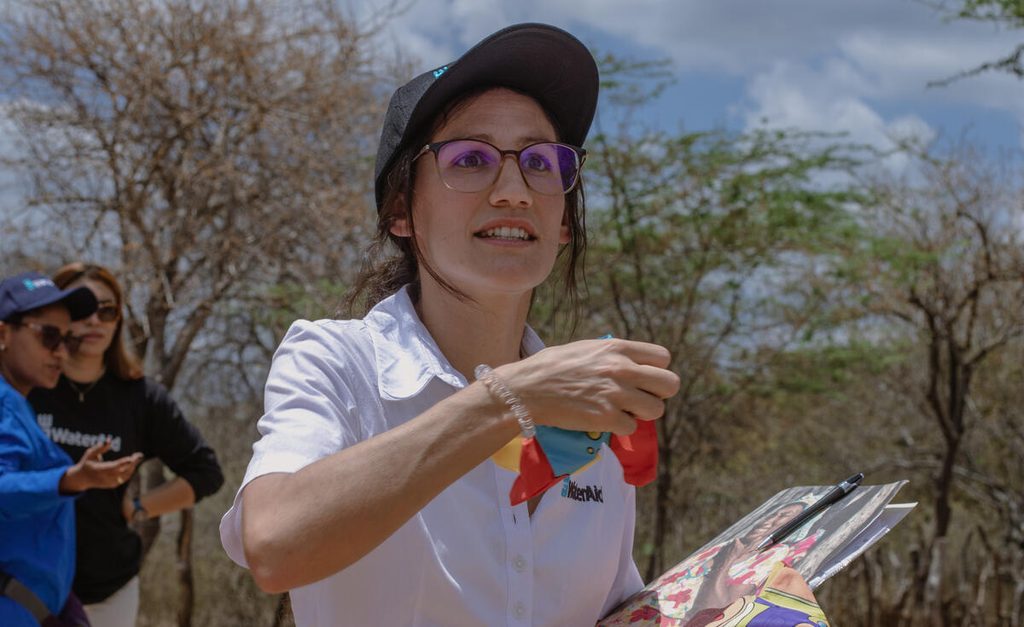
In La Guajira, urban coverage stood at 80% at the 2018 census, and the housing ministry’s 2023 accounting put rural coverage in the department below 50%. WaterAid has worked there for about nine years, and its Colombia director, Candelaria Lucero, is also on the Medellín panel. Bogotá’s cuts were a bad year in a system that exists; across much of La Guajira the infrastructure was never built.
The reservoirs that emptied in 2024 sit in a páramo, a high wetland that absorbs rainfall and releases it slowly. Marcela Fernández, founder of the Colombian NGO Cumbres Blancas and one of the BBC’s 100 Women, works on those systems and is on the same panel; by her count Colombia has lost eight of the fourteen glaciers it once had. The session covers both ends of the problem.
What it would cost
Andesco, the association of public utilities, estimated this year that closing the national water and sanitation gap would cost around 126 trillion pesos, including 28 trillion for wastewater treatment in 58 priority municipalities. It put Colombia’s progress toward the UN water and sanitation goal at 50.7%, and the historical execution rate of money already allocated at an average of 7.2%.
The housing ministry’s own figures, given at Andesco’s congress this year, are narrower. Of 1,147 water and sanitation projects, 222 are financed and running, worth about 5.5 trillion pesos. The other 925, costing 14.8 trillion, have no financing. Minister Jaime Andrés Beltrán said the 2027 budget holds 7 trillion pesos for the sector, but that 5 trillion of it settles existing transfer debts, leaving roughly 700 billion against a need approaching 14 trillion.
That list grew in August. A magnitude 7.4 earthquake centred on San José del Palmar, Chocó, on 10 August killed 331 people and damaged 201,010 homes, according to the national disaster management agency; by early September its tally also recorded 140 damaged aqueducts. Repairing those competes for the same money as the projects already waiting.
José Luis Acero has worked on both sides of that arithmetic. He was Colombia’s vice minister of water and sanitation from August 2018 to August 2022, under Iván Duque, and is now listed as a partner at the investment firm DosOceanos Capital. He is scheduled to speak on the water panel in Medellín.
Featured image: Hidroituango Dam outside of Medellín, Colombia.
Image credit: www.hidroituango.com.co