A plan to swap Colombian cocaine for guns was exposed last week when a Lebanese-Syrian smuggler Antoine Kassis – a cousin of deposed Syrian dictator Bashir al-Assad – faced trial for his attempt to send Russian-made armaments to ELN guerrillas.
The failed plot, which played out in a U.S. federal courtroom last week but seemed more suited to a Hollywood movie, risked putting military-grade weapons sourced from Syrian arsenals in the hands of the Colombian rebels.
In exchange, the ELN planned to send 500 kilos of cocaine disguised in a cargo container of Colombian fruit, according to U.S. Justice Department documents.
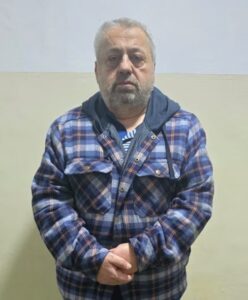
A federal jury convicted Antoine Kassis on charges of narco-terrorism conspiracy and conspiracy to provide material support to a designated foreign terrorist organization after a five day hearing. He now faces at least 20 years in a U.S. prison.
Kassis, 59, who had links to proscribed organizations such as Hamas and Hezbollah, offered the ELN drones, grenades, assault rifles, missiles, mortars and heavy machine guns in exchange for the cocaine smuggled to a Syrian port.
He eventually hoped to sell the Colombian-supplied narcotics throughout the Middle East.
Captured in Kenya
The deal was initially brokered in 2024 before the fall of al-Assad but unraveled after a sting operation mounted by the U.S. Drug Enforcement Administration (DEA) in 2025.
As court documents revealed, Kassis traveled to Africa in February last year after reassuring the Colombian guerrillas that the cocaine swap was still on – even after the unexpected fall of his cousin’s brutal dictatorship in Syria at the end of 2024.
Kassis claimed he could bribe Syrian port staff US$10,000 per kilo of cocaine to import the illicit drug through Latakia, a well-known route for drugs in and out of the eastern Mediterranean.
Despite the fall of al-Assad, he could still access “all the toys”, he told the Colombians, referring to the military-grade weapons.
Unknown to Kassis, DEA investigators had already infiltrated the Colombian end of the deal and sent an undercover agent posing as an ELN weapons expert to the crucial meeting in Nairobi, Kenya.
Kassis was arrested with the help of Kenyan police and extradited weeks later to the U.S.
Meanwhile the suspected ELN counterparts, named by news website Infobae as Alirio Rafael Quintero and Wisam Kherfan Okde, were arrested in Colombia. They are currently detained in Bogotá’s La Picota prison pending extradition requests from the U.S.
Missed missiles
Evidence from the Kassis investigation pointed to a vast money-laundering operation based in Colombia that shifted million-dollar drug profits in cryptocurrencies across four continents. According to court documents, the plot roped in Palestine’s Hamas, Lebanon’s Hezbollah and Mexico’s Sinaloa drug cartel.
The Kassis case also showed that the ELN was attempting to upgrade its weapons arsenal even as the armed group was engaged in on-off peace negotiations with Colombia’s Petro government. Talks are currently on hold.
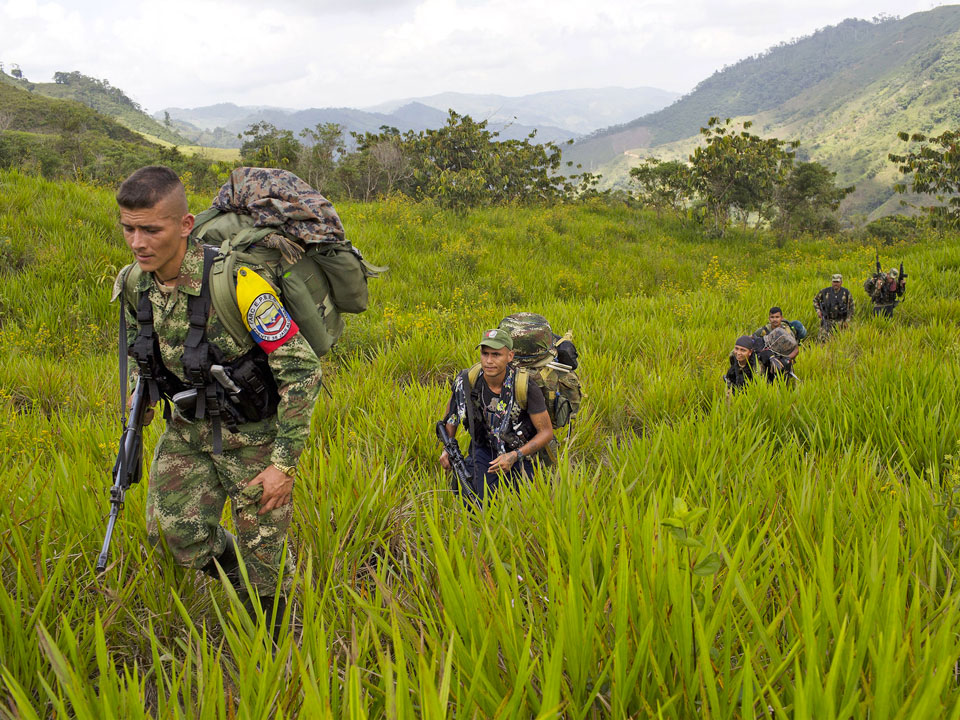
The Marxist rebel group, properly known as the Ejército de Liberación Nacional, has been fighting the Colombian state since 1964 and is currently said to have 3,600 armed combatants, many based in neighboring Venezuela where it controls drug routes and illegal mining camps.
The latest round of peace talks, under Petro’s controversial Paz Total initiative, has seen the ELN expand in both territory and numbers within Colombia, with an estimated growth of 9 per cent in the last two years. Attempts to obtain Russian-made weapons via Syria are likely linked to that expansion.
See also: Peace Plan has caused more conflict, says thinktank.
Of note was the missiles included in the thwarted Syrian cargo. Though exact details were not given in the court documents, these could refer the portable shoulder-fired anti-aircraft weapons, highly coveted by Colombia’s armed groups for their ability to down helicopters and small attack aircraft used by state forces against insurgent groups.
In recent months Colombian armed forces have returned to aerial bombing of suspected guerrilla camps, a controversial practice that risks killing or injuring civilians and children. Bombing campaigns against dissident FARC groups in Guaviare late last year left at least 15 minors dead, according to news reports from the time.
And on February 4 this year, an air attack ordered by President Petro on an ELN camp in the Catutumbo region left seven ELN fighters dead, with no reports of child victims.
The ELN have in the past experimented with home-made anti-aircraft missiles, such as found in a hidden cache in Cauca in 2018, and some of their combatants are thought to have been trained in the use of Russian-made Igla-S missiles, of which 5,000 are used by state forces in Venezuela.
Hezbollah’s Latin American hubs
The Kassis case highlighted links between Colombian armed groups and the Middle East that include designated terror groups such as Lebanon-based Hezbollah.
According to expert testimony at a U.S. senate caucus on narcotics in October last year, groups like Hezbollah received funds via drug trafficking and money laundering in Latin America, with hubs in Brazil, Paraguay, Venezuela and Colombia.
“Hezbollah capitalized on a combination of weak local governance, corruption, and the presence of sympathetic diaspora communities to create cells and recruit financial facilitators,” former treasury official Marshall Billingslea told the caucus in October last year.
Billingslea suggested that Hezbollah could source up to a third of its income from Latin America, and until recently had close links through its Iranian backers Venezuela, now in flux with the forced removal of former president Nicolás Maduro to the U.S. in January this year.
Hard pivot to Colombia
But while its Venezuelan ties were more often reported, the Lebanese Shi’ite group had also made inroads into Colombian crime circles with a long history of deals, such as cocaine shipments sent by the Oficina de Envigado cartel, and drugs-for-weapons swaps with the former FARC guerrillas, he said.
In 2016, U.S. prosecutors brought charges against a Hezbollah laundering ring based in Medellín, according to reports in the Miami Herald at the time. Funds were connected to jailed Mexican kingpin Joaquín “El Chapo” Guzmán.
Billingslea explained that groups like Hezbollah also saw Colombia as a refuge for foreign operatives who obtained fake passports and ID cards. Recent turmoil in the Middle East could stimulate armed groups there to increase their interests in countries like Colombia, he said.
“Now, with their Lebanese infrastructure in shambles, and with robust financing from Iran again in doubt, I believe Hezbollah will make a hard pivot to Latin America and to the drug trade in particular.”