UNESCO has designated Medellín, Colombia’s second-largest city, as the World Book Capital for 2027, recognizing the Colombian city’s rapid growth in reading culture and its use of books and libraries as tools for social transformation.
The decision, announced in March, follows a recommendation by the organization’s World Book Capital Advisory Committee, made up of publishers, booksellers and authors.
Medellín will become the 27th city to hold the title since 2001, with its program set to begin on April 23, 2027, coinciding with World Book and Copyright Day.
UNESCO said Medellín has seen a 542% increase in bookstores over the past 70 years, placing it at the top of Colombia’s reading index. The city is home to more than 110 bookstores and 25 libraries, many of them built as part of urban renewal projects that transformed former prisons and police facilities into cultural spaces.
“Books are not just carriers of stories. They are a source of creativity and learning,” said UNESCO Director General Khaled El-Enany, adding that Medellín’s designation sends “a powerful message about how culture can build peace and social cohesion.”
Mayor Federico Gutiérrez described the recognition as a milestone for the city. “Medellín has shown that reading is a fundamental part of its culture,” he said. “We want every child born here to grow up with a book in their hands.”
Gutiérrez said Medellín’s bid for the World Book Capital designation was built around five strategic pillars, including early childhood reading programs to ensure access to books from birth, as well as initiatives to promote reading among students through book clubs and opportunities to meet authors and engage with their work.
Cities named World Book Capital commit to promoting reading across all age groups and organizing a year-long program of cultural activities. According to Spanish-language philologist Andrea Peláez, the initiative is designed to support cities with strong cultural momentum.
“These are cities with significant cultural mobilization,” Peláez said. “UNESCO supports them for a year to develop projects that promote reading, especially among young people and vulnerable communities, while strengthening literacy ecosystems overall.”
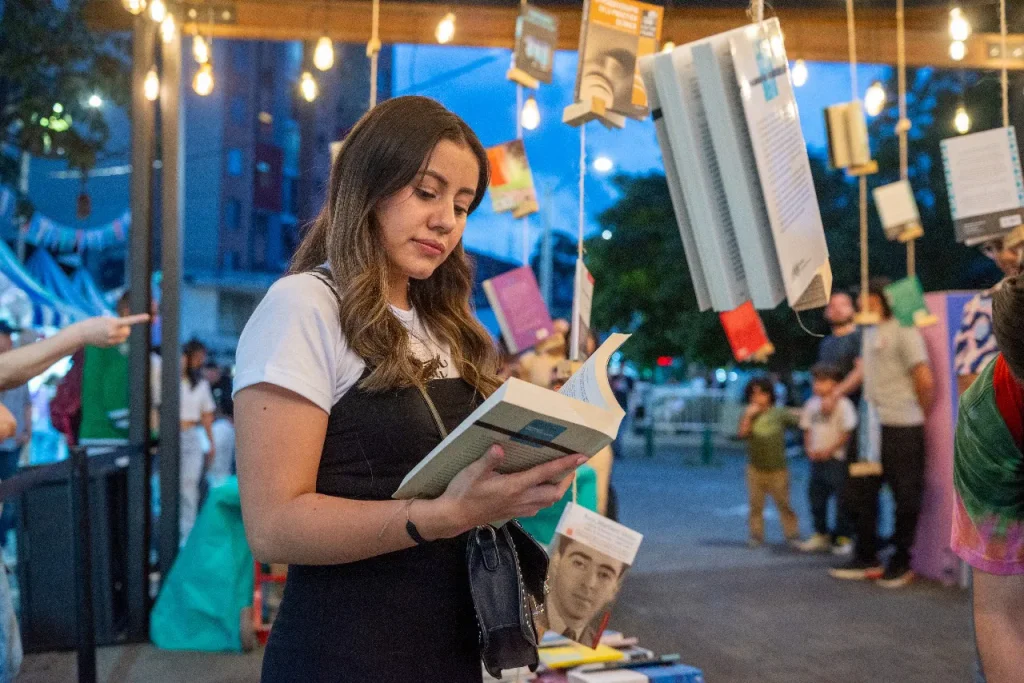
A key part of Medellín’s literary ecosystem is its Eventos del Libro, a series of large-scale public events including the Book and Culture Festival (Fiesta del Libro y la Cultura), which bring together writers, publishers and readers across the city.
These events promote reading through school programs, author visits and community activities, often encouraging students to engage with books ahead of meeting authors in person.
UNESCO said the designation is part of broader efforts to strengthen literacy and access to books worldwide, highlighting similar initiatives in regions such as Central America and Ethiopia.
Once associated with violence, Medellín has gained international recognition in recent decades for its cultural and urban transformation – with books and libraries playing part in that shift.
Featured image credit: Festival de Libro Medellín.