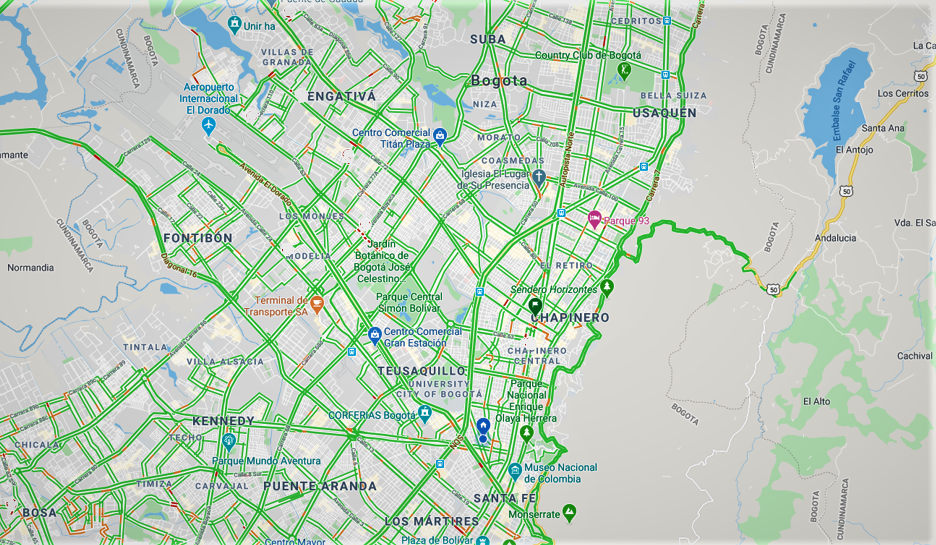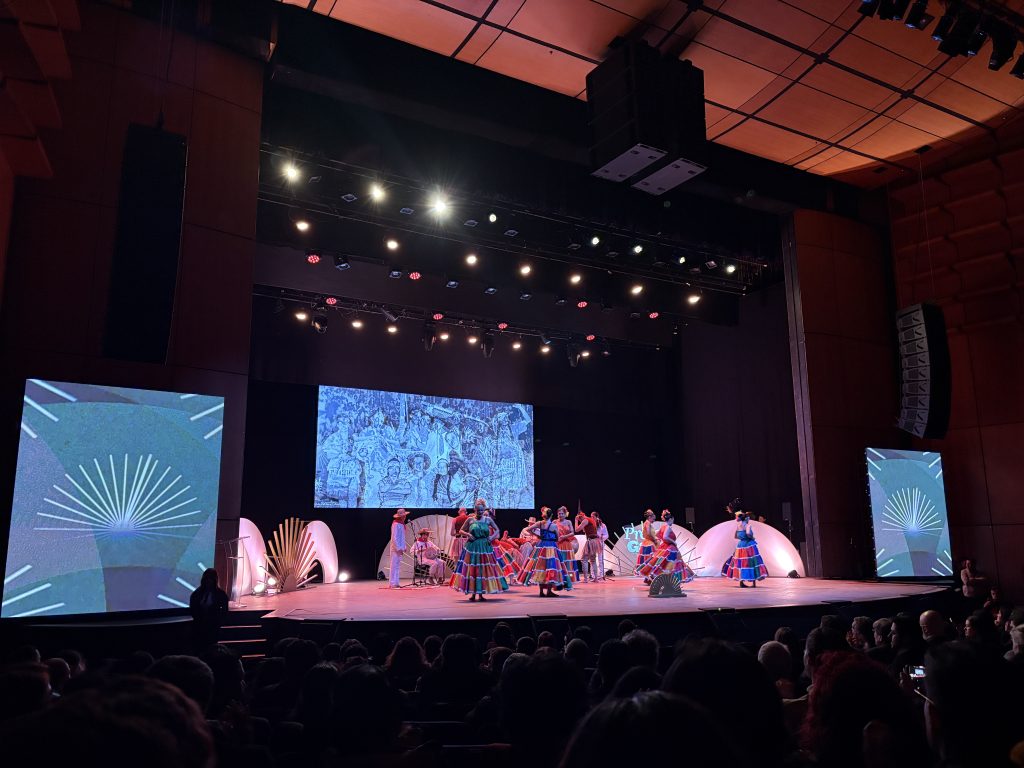
The Gabriel García Márquez (Gabo) Awards for Ibero-American Journalism ceremony took place on July 24 at the Jorge Eliécer Gaitán Theatre in Bogotá, Colombia, as part of the 14th Gabo Festival, held from July 24 to 26.
The awards ceremony paid tribute to journalists killed in Colombia, highlighting the two most recent cases this year: 24-year-old Mateo Pérez Rueda and 50-year-old Cristian Herrera.
They are the latest additions to the list of 171 journalists who have been killed in Colombia since 1977 for carrying out their profession, according to the Foundation for Press Freedom (FLIP).
“There are lists that no organization should ever have to write. For the past 30 years, FLIP has been writing one of them,” said Sofía Jaramillo, Executive Director of the FLIP, during the ceremony.
Pérez Rueda disappeared on May 5 this year and his body was found three days later in Briceño, Antioquia. The 24-year-old was the director of the digital news outlet El Confidente in the municipality of Yarumal, where he reported on violence and armed conflict in the region.
Herrera, meanwhile, was a crime reporter based in Cúcuta, Norte de Santander, and was killed on June 6. He led the news outlets Cúcuta Real and Cúcuta Rojo Vivo, covering corruption, armed violence and drug trafficking. He was also a member of FLIP’s Board of Directors and served as one of the organization’s regional correspondents.
As part of the tribute, the festival hosted an exhibition titled ‘Para que no me olvides’ (So that you do not forget me), dedicated to preserving the memory, legacy and investigative work of both journalists. The exhibition featured personal belongings, notes written by their loved ones, press clippings, press credentials and photographs, offering visitors a glimpse into their lives and careers.
Jineth Bedoya, a journalist, survivor of sexual violence and founder of ‘No Es Hora de Callar’ (Now Is Not the Time to Be Silent) campaign, used her remarks to highlight the ongoing violence faced by female journalists behind closed doors, including within their own newsrooms and at the hands of colleagues.
She addressed the creation of the #YoTeCreoColega (#IBelieveYouColleague) movement, which emerged in the wake of the recent Colombian #MeToo wave. Women with a public voice – including journalists – have published open letters on a number of cases, including former President Andres Pastrana’s alleged links to the Epstein files and complaints of harassment by female journalists from prominent media outlets Caracol and RTVC.
“This is the other threat to press freedom that we do not want to talk about,” Bedoya said.
The awards recognised excellence across five categories, each with three finalists: Photography, Audio, Image, Coverage and Text. The ceremony also presented the 2026 Gabo Award for Excellence, which was bestowed upon Colombian journalist Catalina Gómez Ángel in recognition of her work as a war correspondent in the Middle East, embodying what the organizers described as “the finest journalism of our time”.
Each winner received a cash prize of 35 million Colombian pesos (approximately US$8,700), along with a sculpture of García Márquez created by Colombian artist Antonio Caro.
The winners in each category were:
- Photography: Como sobrevivem as democracias (How Democracies Survive) — Brazil
- Audio: Se llamaba como yo (She Had the Same Name as Me) — Spain
- Image: Terceirão – um ano, quatro vidas (Final Year of Secondary School – One Year, Four Lives) — Brazil
- Coverage: A política da bala (The Politics of the Bullet) — Brazil
- Text: El exilio nos alcanza (Exile Catches Up with Us) — El Salvador
The ceremony opened with an artistic and cultural performance and was attended by prominent figures from the region’s journalism community. Speakers also included Bogotá Mayor Carlos Fernando Galán, Jaime Abello Banfi, General Director and co-founder of the Gabo Festival, and representatives from sponsors Bancolombia and Sura.
The festival welcomed more than 15,000 attendees, 311 guests, 185 activities and the participation of 107 partner organisations. It included a wide range of events, such as panel discussions, workshops, masterclasses, exhibitions, live podcasts, stand-up performances and other experiences exploring Ibero-American literature, culture and journalism.